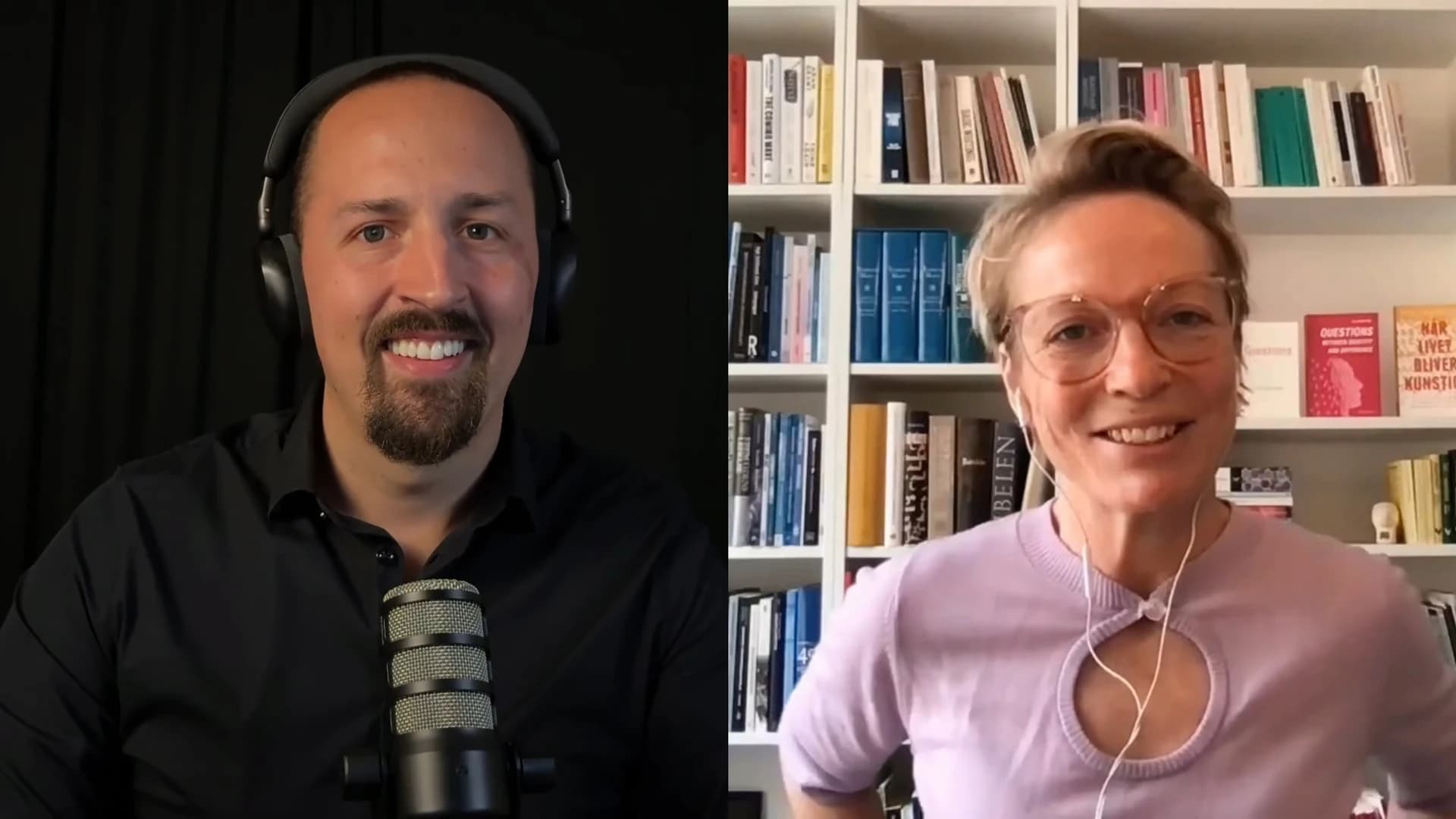
Dr. Pia Lauritzen
AI Has Answers. Leaders Own the Question.
On judgment, responsibility, and why faster answers don’t remove the need for better questions.
Watch the Conversation — AI Has Answers. Leaders Own the Question. (opens in a new tab)
For founders and CEOs
Send me one real decision. I’ll personally record a private video breakdown showing where it returned, why escalating made sense, and what I’d test first.
Free. Private. No call required. Delivered within three business days.
ONE WEEK
Four decisions, from four different teams, each returning to the same desk: the CEO.
CEO
MONDAY at 09:14VP SALES
Can you approve this?
TUESDAY at 11:37OPERATIONS
What would you do?
WEDNESDAY at 15:42FINANCE
We just wanted to run this past you.
THURSDAY at 16:18COMMERCIAL
They’re pushing back. Should we change it?
I call that a Decision Return.
Nobody ever said who decides, so escalating is safer than choosing.
They can run the work. Nobody authorised them to be wrong about it.
Conditions move. Nobody knows whether the original authority moves with them.
You have a very expensive queue.
Tell me about a real call your team should have handled without your approval, input, or final word.
No quiz.
No automated score.
No AI advice soup poured into a nice PDF.
I read it, think about it, and record the video myself.
Delivered within three business days.
I’ll send you a private video showing:
BeforeEvery risky call waits for you.
AfterOnly real exceptions reach you.
BeforeManagers own tasks, not hard choices.
AfterManagers know which calls are theirs.
BeforeAsking feels safer than deciding.
AfterPeople know what they can decide alone.
BeforeDecisions reopen when work begins.
AfterClosed decisions stay closed.
The test is simple.
The same kind of call appears again.
The risk is still real.
Your team handles it without you.
The decision simply stops coming back.
The conversations behind the work
On Decision Load, I talk with founders, researchers, and operators about pressure, responsibility, and why decisions stall, reopen, and keep moving upward.
Dr. Pia Lauritzen
On judgment, responsibility, and why faster answers don’t remove the need for better questions.
Watch the Conversation — AI Has Answers. Leaders Own the Question. (opens in a new tab)
Lucia Hagenbartová
How pressure narrows options and changes the way leaders respond.
Watch the Conversation — Pressure Comes With the Seat. It Still Shouldn’t Make the Decision. (opens in a new tab)
Manuel De Vits
On rejection, responsibility, and the choices people avoid when the conversation gets uncomfortable.
Watch the Conversation — More Leads Won’t Fix a Bad Sales Conversation. (opens in a new tab)I spent years in enterprise support and engineering, where unclear ownership turns small issues into senior problems fast.
I kept seeing the same pattern: someone owned the outcome but not the authority, the risk moved upward, and a senior person stepped in because waiting had become more expensive than deciding.
That pattern became Decision Stability.
My work is straightforward:
No huge change programme.
No new committee.
No sticky-note festival.
Share the context first: the recurring decision, who’s meant to own it, and how it escalates. I review it before we speak—so the free 45-minute call starts with the actual problem, not twenty minutes of introductions.
You share the context
I review it before we speak
The call starts with the problem
Share the context first. I review it before our free 45-minute call.
No pitch unless there is something real to fix.
Sometimes there is not.
Excellent. We stop there like adults.
Send me one real call that keeps coming back, and I’ll show you why it returned and what I would test first.
Free. Private. Delivered within three business days.
Already know it is a wider problem?
Start Your Free Decision AuditThe Publication
Unfiltered truths about leadership, pressure, bad decisions, AI slop—and the things people only admit after the meeting.
No leadership theatre. No polished nonsense. No 4:30 a.m. routines.
Read Decision Load Unfiltered (opens in a new tab)